Japanese - ハリー・ポッターと賢者の石
Read pgs (131 - 134)
WaniKani - 20 mins
Writing - Secret Project - 1 hr
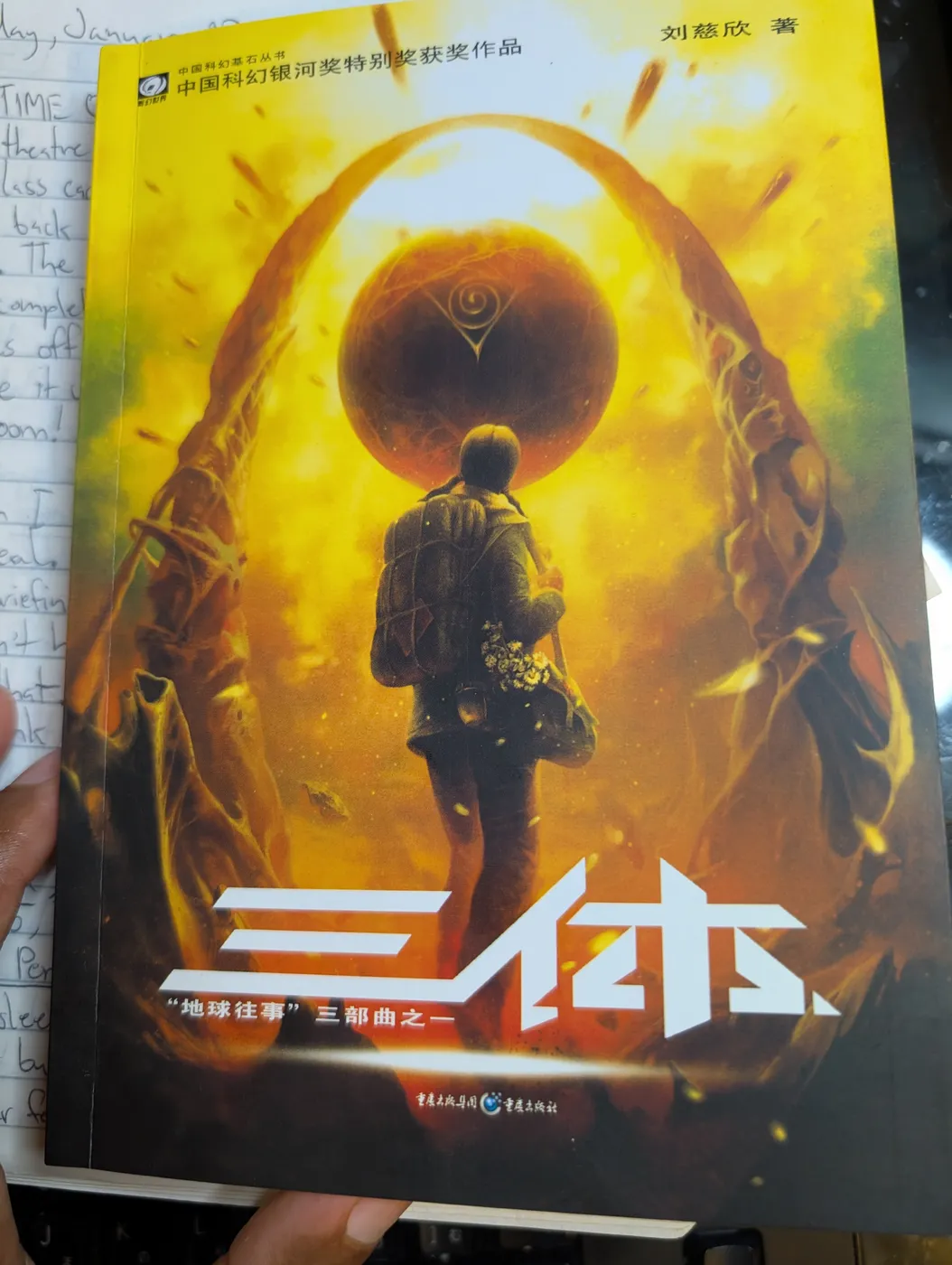
Book of the day - 三体 (Three Body Problem) Chinese
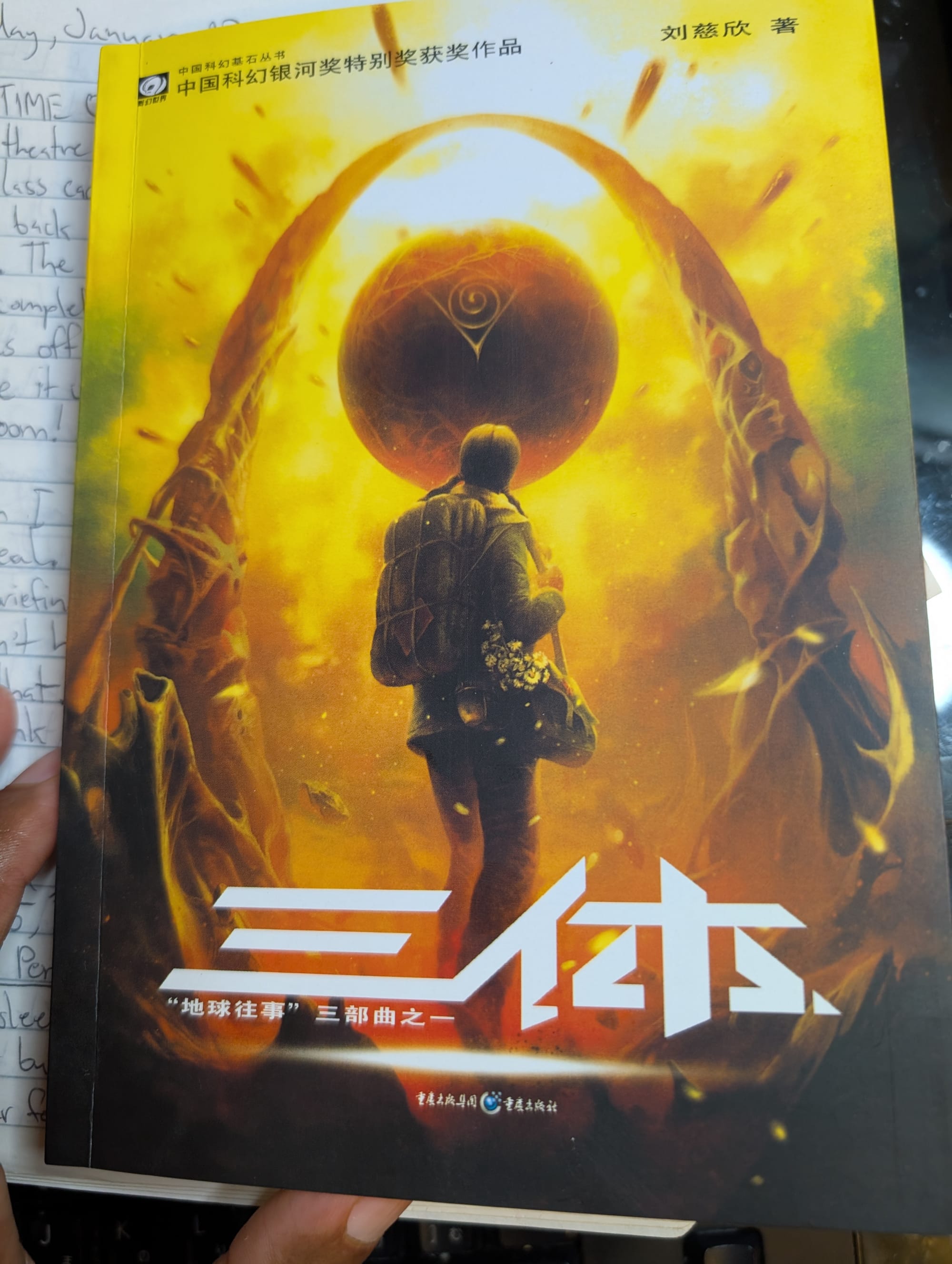
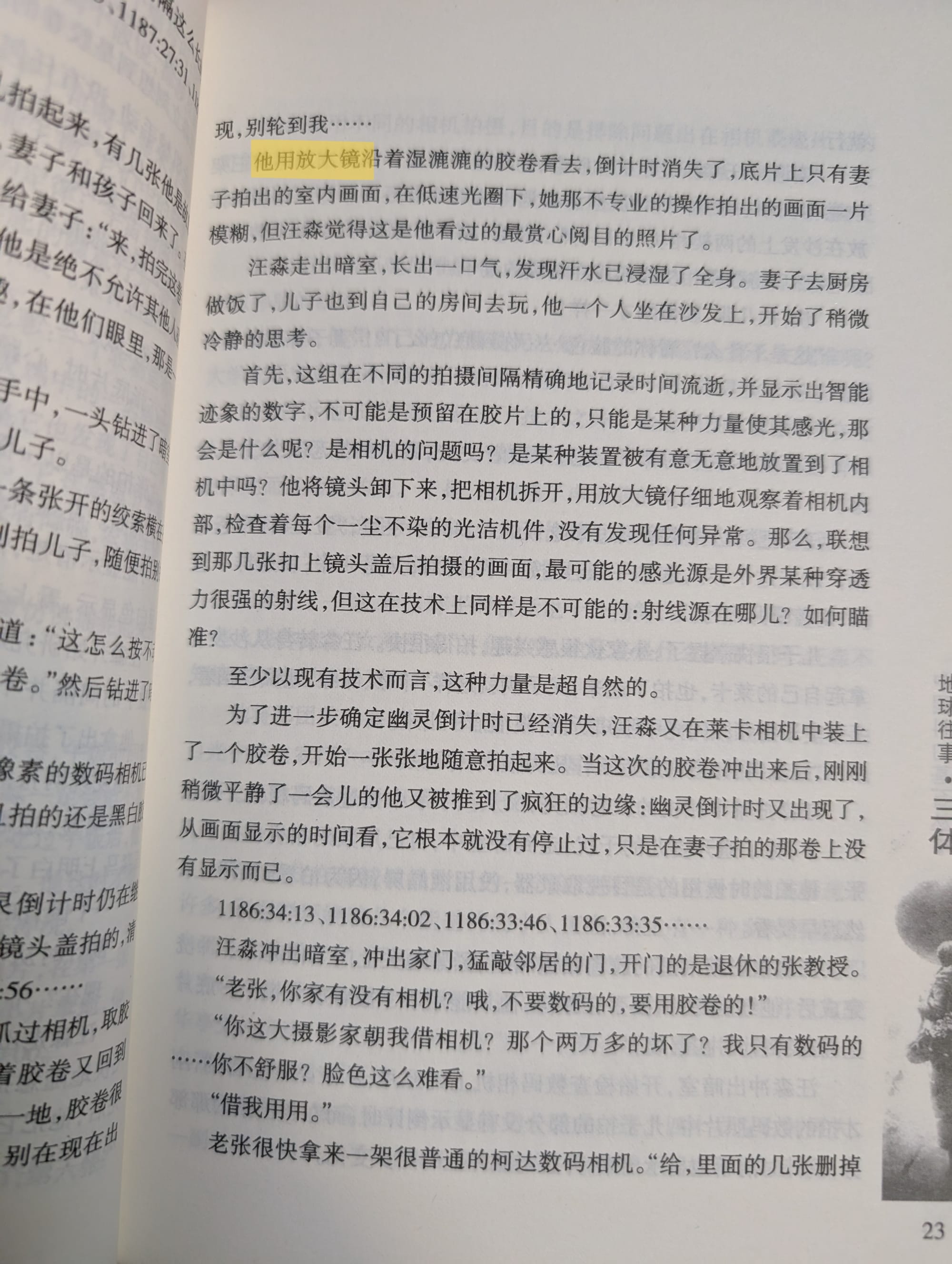
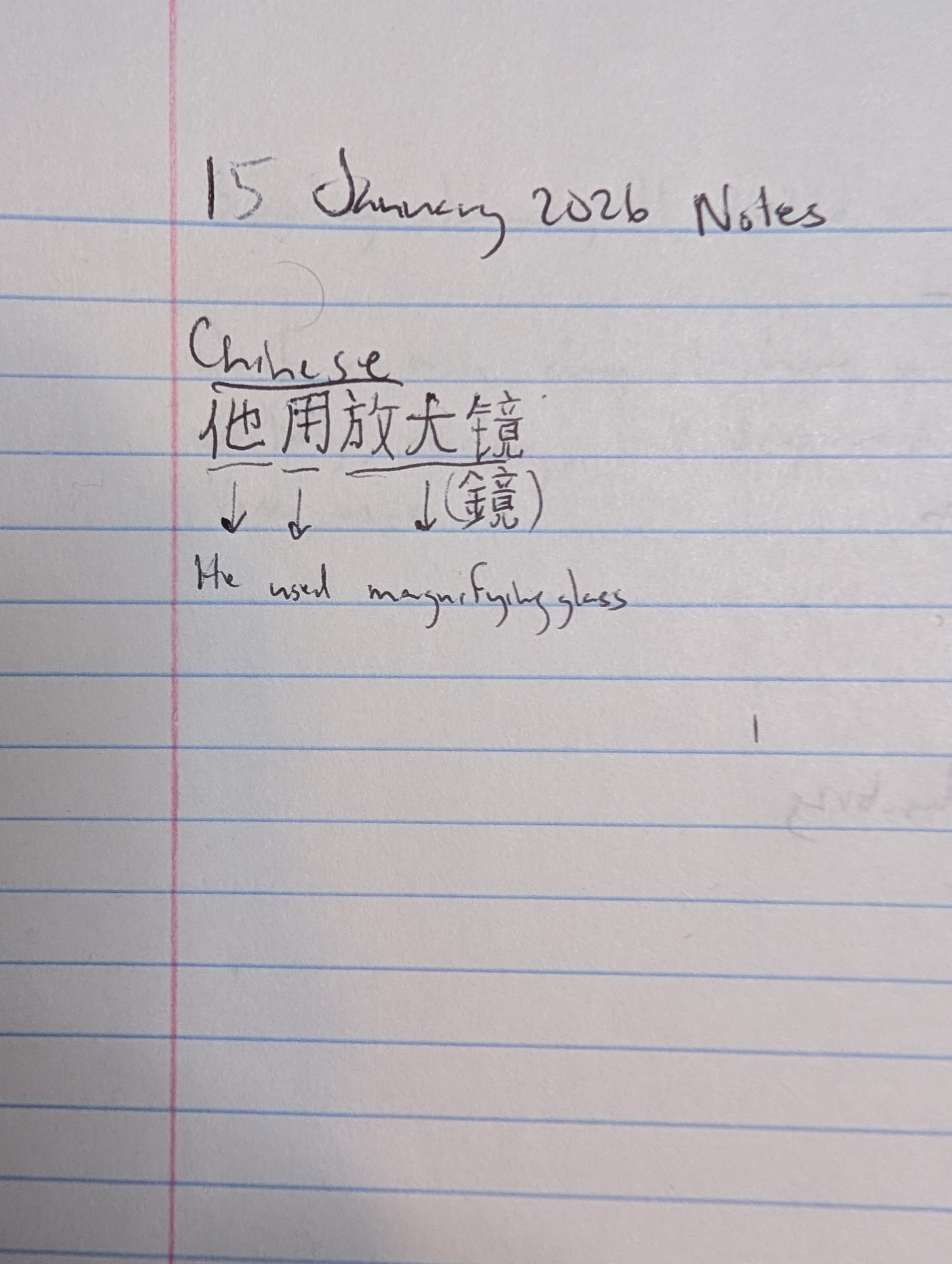
Intensive reading - 他用放大镜
他 - he
用 - use
放 - release
大 - big
镜 - lens
"Secret Project" excerpt:
Major Wheely, a tall stocky woman who I heard was missing a toe on the left foot, was the speaker and she was a complete nutcase. Hands, spit flying all over as she stomped back and forth.
Drawing - 10 mins
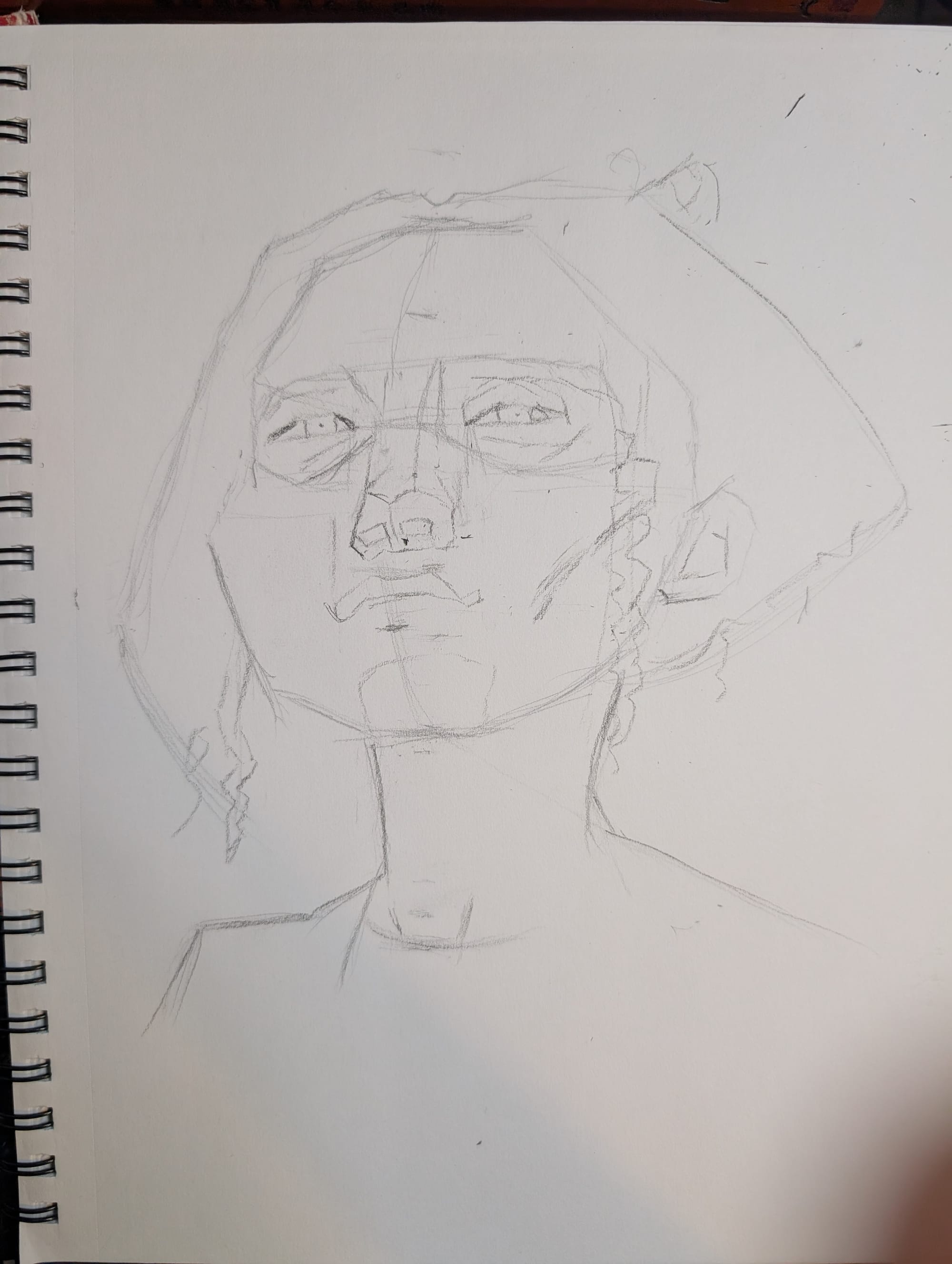
Portrait Proportion Study — Practice Notes
Goal:
Practice facial proportions and construction using relative measurement and basic forms.
Method:
- Followed the lesson stroke-for-stroke without pausing excessively
- Focused on placement, not detail
- Built the head from large shapes first, then refined
- Used relative features (eyes → nose → mouth → chin) to lock in spacing
- Avoided rendering; treated this strictly as a structural study
Key Takeaways:
- Start big, then work inward
- Use existing features to measure new ones
- Basic shapes reduce intimidation
- Construction clarifies personality and pose early
- Accuracy comes from relationships, not perfection
Practice Constraints:
- Mostly drawn with non-dominant (left) hand
- No tracing
- No erasing for polish—only for structural correction
Brief Reflection:
This reads clearly even without refinement. The likeness holds because the proportions hold. Drawing feels less intimidating now, and starting no longer feels like friction.
Keith's Reflection
So I did this portrait to practice proportions, and this is just gonna be like a notes download for my website.
Yeah, as you can see, it's pretty good. As I do video courses these days, especially if they're interactive, I try and follow along like stroke for stroke, word for word.
it's not as good as doing it myself, but I can't do it myself right now. So it's just as good.
I like the Proko courses just because I've been doing their drawing beginners course for the last, it feels like the last several years, because I bought it probably two years ago and I've just been going through it very slowly.
But what I've noticed is doing drawing has become less, it's kind of become like Japanese for me to where it's not as hard to get to the pencil and get to the paper anymore.
Before I really like dreaded it because, you know, it's just slow and you suck at it. But so it's just become more of a natural thing.
And I'm starting to enjoy it more just because my lines have gotten more confident and the different procedures, you've just gotten cleaner and easier to do.
One thing I'm proud of with this practice drawing is that most of it was done with my left hand and I've been doing this thing where I've been training my left hand as well as my right.
So anytime I start a session... I just kind of randomly select, okay, is it gonna be my dominant hand or non-dominant hand?
And as you can imagine, the first several months, actually, I've been doing this for since I started drawing off and on four years ago now, about in 2022.
So it's one of those things that I haven't been very consistent with my drawing, but I clearly, with this example, I've gotten better.
I mean, this is a very legible. It's probably one of the best things I've drawn. Of course, it's like the next level up from tracing, which I shouldn't say that.
Tracing is definitely like, you just wanna get something down. You wanna practice. There's reasons to trace.
But this is me judging along with the instructor. And of course, I try and keep up with the video.
I don't stop it as much as I used to anymore. But yeah, I'm proud of this.
The proportion exercise, you really, you can tell he's (the instructor), you can tell when somebody's more of a perfectionist because they, you know, they obsess over the details.
And most of the time he's teaching, and this is the guy who's teaching the course, Proko.
But I found the measuring techniques a little excessive, but I understand why he does it. And I think it's a good thing.
And really what I got from this exercise was, you use relative features on the subject, whatever you're drawing, in this case, a portrait, to determine where the best fit lines are, and then you use basic shapes to construct the feature, you know, you start big to small, you start with the head, you start with the, you know, the big features, and then you just kind of zoom in.
Just getting that process down and understanding that that's the best way because, you know, when you first see the picture, you're just like intimidated.
Where do I start? Do I just draw a circle from the head and go from there? No, he has a very technical approach to doing, to tackling a picture like this.
I kind of like that, it emphasizes the problem-solving nature of art.
You know, of course, there's an interpretive side to it as well, but that problem-solving technical side is really good to have to really lock in, okay, what's the position, what's the personality, and then you can see from just like, this is far from a complete portrait, but it reads well.
It looks distinct. It looks very much like, I don't have the original picture, but it looks very much like the original picture did, a young black woman posing.
So, very proud of this and looking forward to more. That's it.
Writing (Novel) - Cereus & Limnic: Escape From Okinawa - Type B - 45 mins
三体 (Three Body Problem) Chinese (pg 1)
科学边界
Random word:
analysand
a person undergoing psychoanalysis
Novel excerpt:
Completely surrounded. I’d been pre-analysanded-in by a probing enemy. Every move predicted. When I got to the top that was the situation.
From looking at their eyes and stances the forces were from the trio of warring nations: Chinese conscripts and U.S. mercenaries to my left and right rear flank, then at the tip ahead of me formed an equi-dimensional triangle of Japanese soldiers in forest-camo uniforms.
Post-Writing Session Breakdown — Chapter 6: “Trap” (Shade’s Journal)
Today’s session landed on one of those moments that always shows up in my novels: the pressure point where multiple plot threads collide and the story has to choose how it’s going to break.
This section marks the moment where Shade becomes truly alone.
Up to now, he’s still had anchors— his brothers (even if they’re missing), and Timeera. This scene strips that last support away without removing it entirely. Timeera has to be taken out of play, but not erased. Her removal needed to feel surgical, intentional, and emotionally destabilizing rather than final. The drone extraction accomplishes that while also doing something more important: it confirms that this moment was never chaotic. It was engineered.
What I leaned into while writing was the feeling of being pre-read. Shade isn’t just ambushed—he realizes he’s been analyzed, predicted, and maneuvered into position long before the first shot. By the time he reaches the mountaintop, the trap is already closed. The geography, the factions, the timing—all of it converges into a single configuration designed to leave him with no clean move.
Introducing Captain Kita Arata here was a deliberate choice. I’ve always hated antagonists who are hyped in abstraction but fold the moment they confront the protagonist. This unit needed to earn its menace. The precision, the restraint, the calm brutality— this is a force that doesn’t improvise because it doesn’t need to. If such a group existed, it wouldn’t be sloppy or theatrical. It would be exact.
Because this is written as Shade’s journal, the description stays tight and observational. He notes stances, weapons, positions—not inner monologues about fear. The journal format quietly confirms his survival while preserving the real tension: how he survives, and what it costs him.
Tonally, this scene is very intentionally in conversation with Metal Gear Solid. Not just the aesthetics, but the structure: the moment where the antagonist doesn’t immediately kill you because understanding matters. Kita doesn’t monologue because he’s arrogant—he speaks because his worldview demands articulation. His philosophy isn’t flavor; it’s setup. What he believes will matter when the trap finishes closing.
This chapter is doing quiet structural work. It isolates Shade. It confirms the scope of the conflict—three nations, one target. And it sets the table for a confrontation that isn’t just physical, but ideological.
The next step is finishing the scene and letting the inevitable conclusion arrive on its own terms. The trap is sprung. Now the story has to decide what kind of escape—if any—is possible.