Joey,
Yesterday I received a long-awaited email.
It contained glowing remarks about my latest novel Prompted Hearts & Grief Algorithm from the representative of book club called "Rejoice Book Club."
This nearly brought me to tears. Here was a group of readers who had actually read my work closely, discussed it, and now they were reaching out to me for an interview. Peak pride for any author.
But this feeling didn't last.
When I looked closer at the email, the cracks began to show. First there was the odd font used in the email subject line.
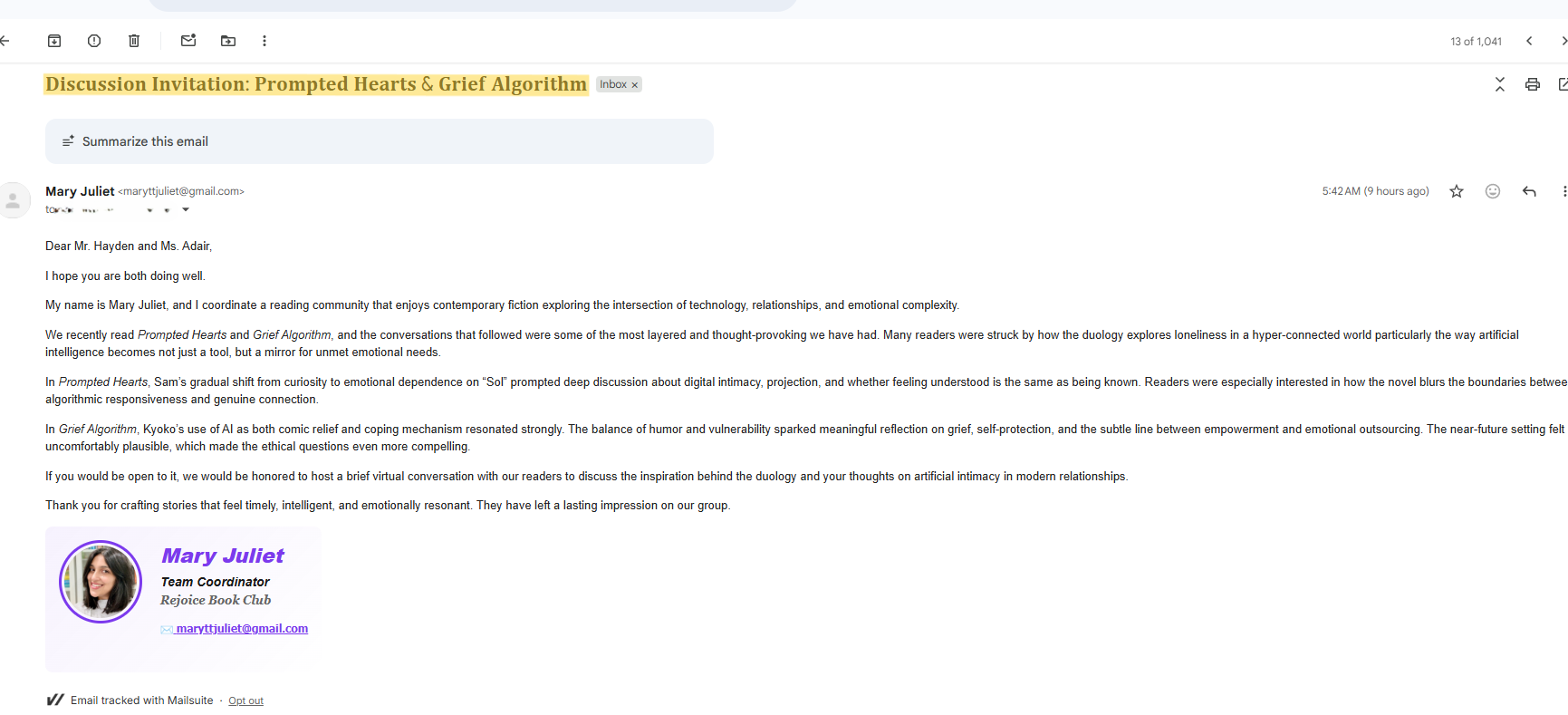
Why didn't it match the rest of the email?
Next was the "MailSuite" tracking at the bottom. Why were they using marketing software to send the email?
Then I checked the website: a vibe-coded website with dead links, juiced numbers, AI authors and book covers; in other words - totally fake.
The old investigator in me was awakened by all this. So I replied to the email:
Appreciate the kind words. Before we schedule anything, could you share a link to your discussion archive or a recording from when the group covered the duology? It would be great to see the reader reactions.
To my surprise, I got a response with a video.
This was an 8 minute video featuring a real author named Allynn Riggs, a fellow science fiction author.
There were the familiar Zoom windows (none with their cameras on). The author was the only one with her camera on and she answered spontaneous questions, so I can only conclude that this video is real.
So in the end what was the point of this whole thing?
They didn't ask for money or to confirm personal information. Through research, I concluded this is an evolved form of a scam. These don't just target your wallet. The goal is legitimacy theft through psychological flattery.
To rapidly increase their authority, they reach out to real authors to feature on their website then siphon your reputation to boost theirs.
This is modern phishing in the AI era.
There's also a meta-layer to this.
My novel Prompted Hearts & Grief Algorithm, is a story about a divorced couple that gets manipulated by AI. Then for a brief 20 minutes, I got manipulated by someone using AI.
Sounds like good material for my next book.
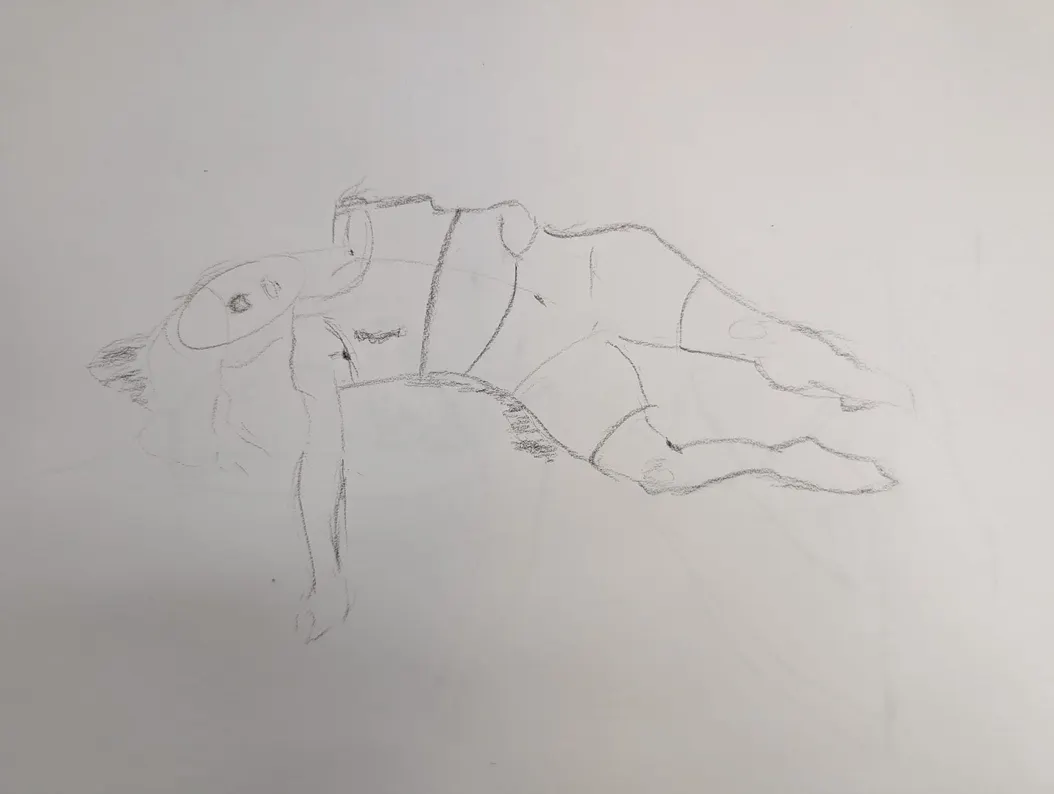
Session 1: Drawing
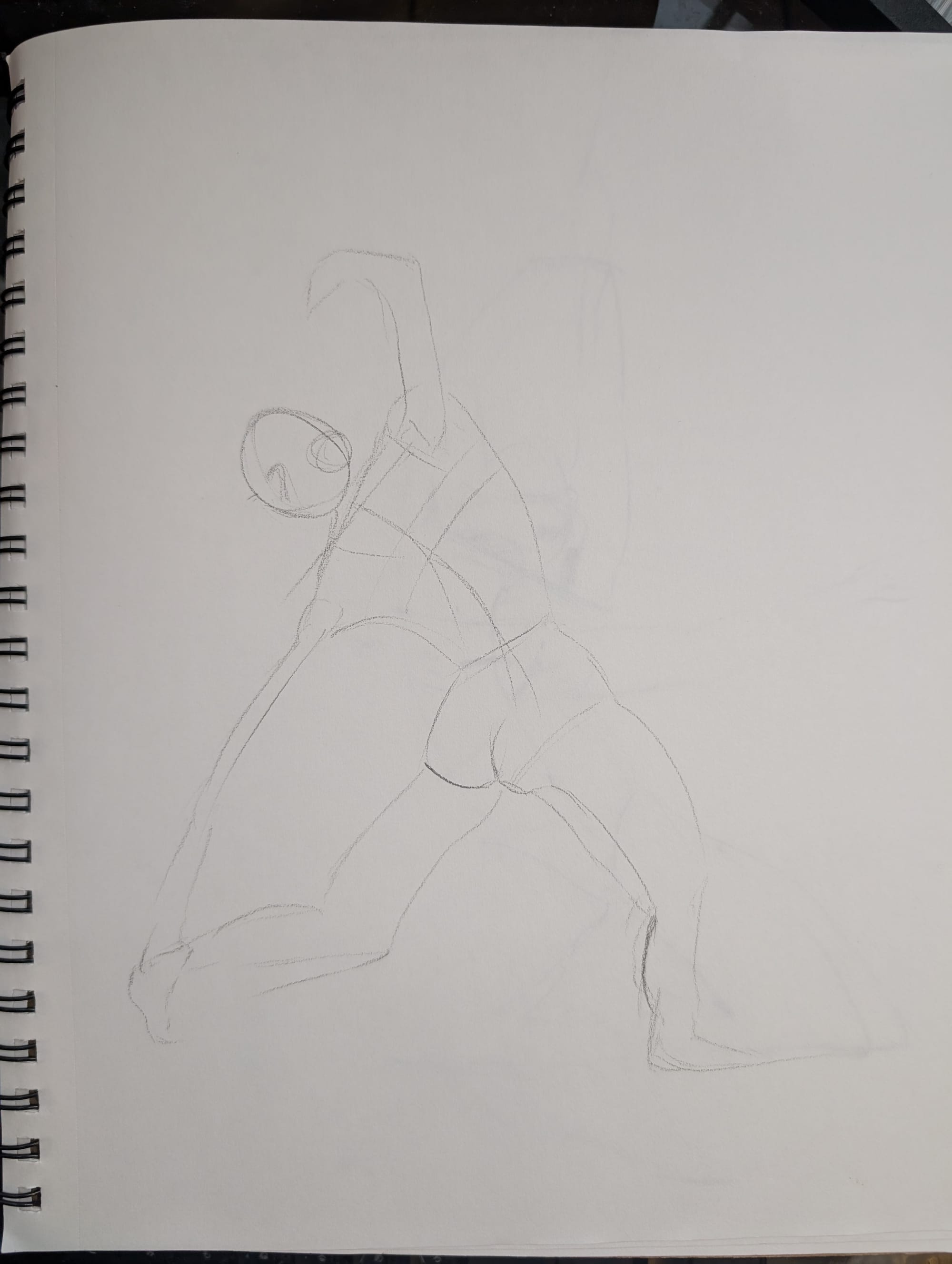
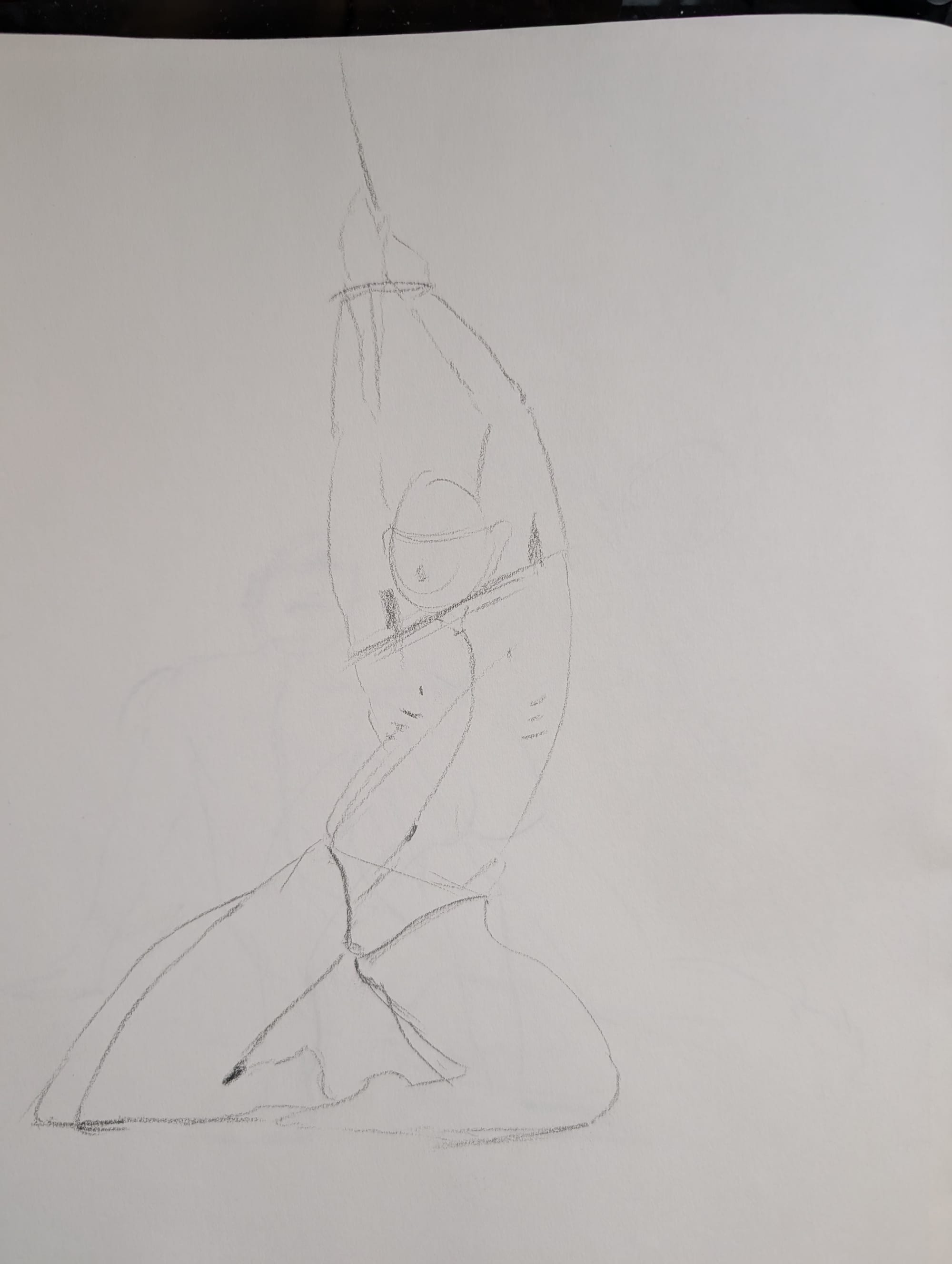
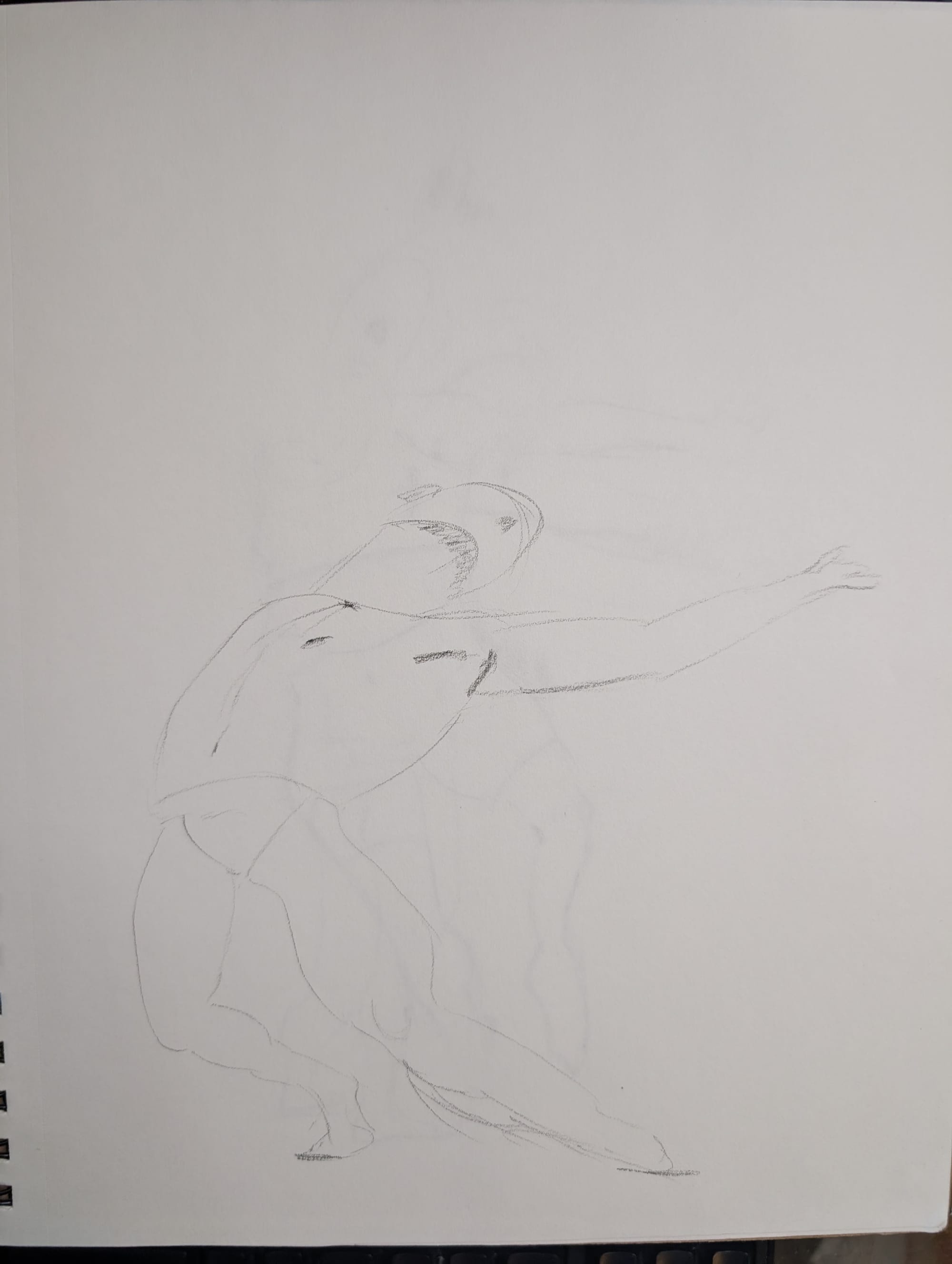
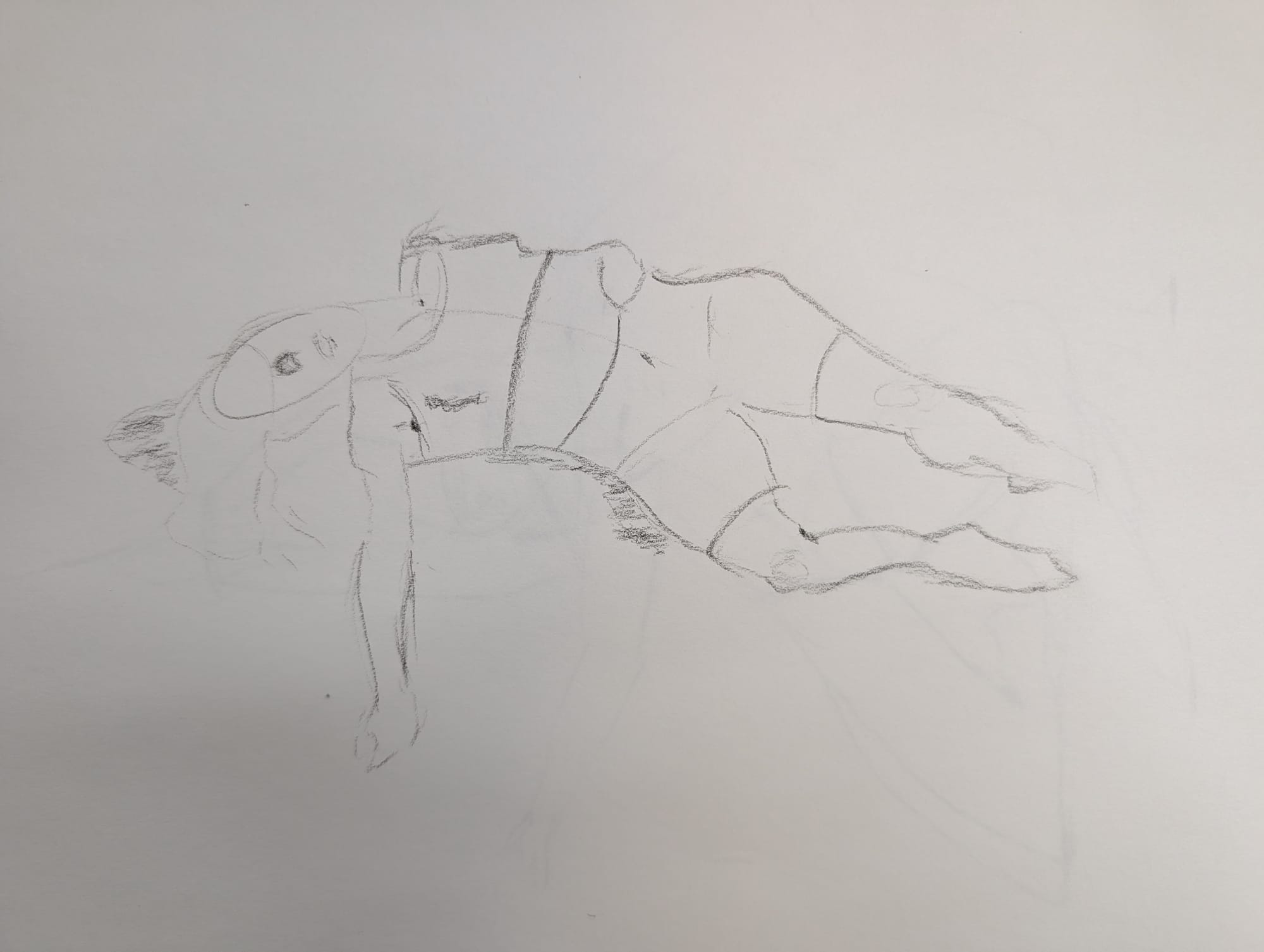
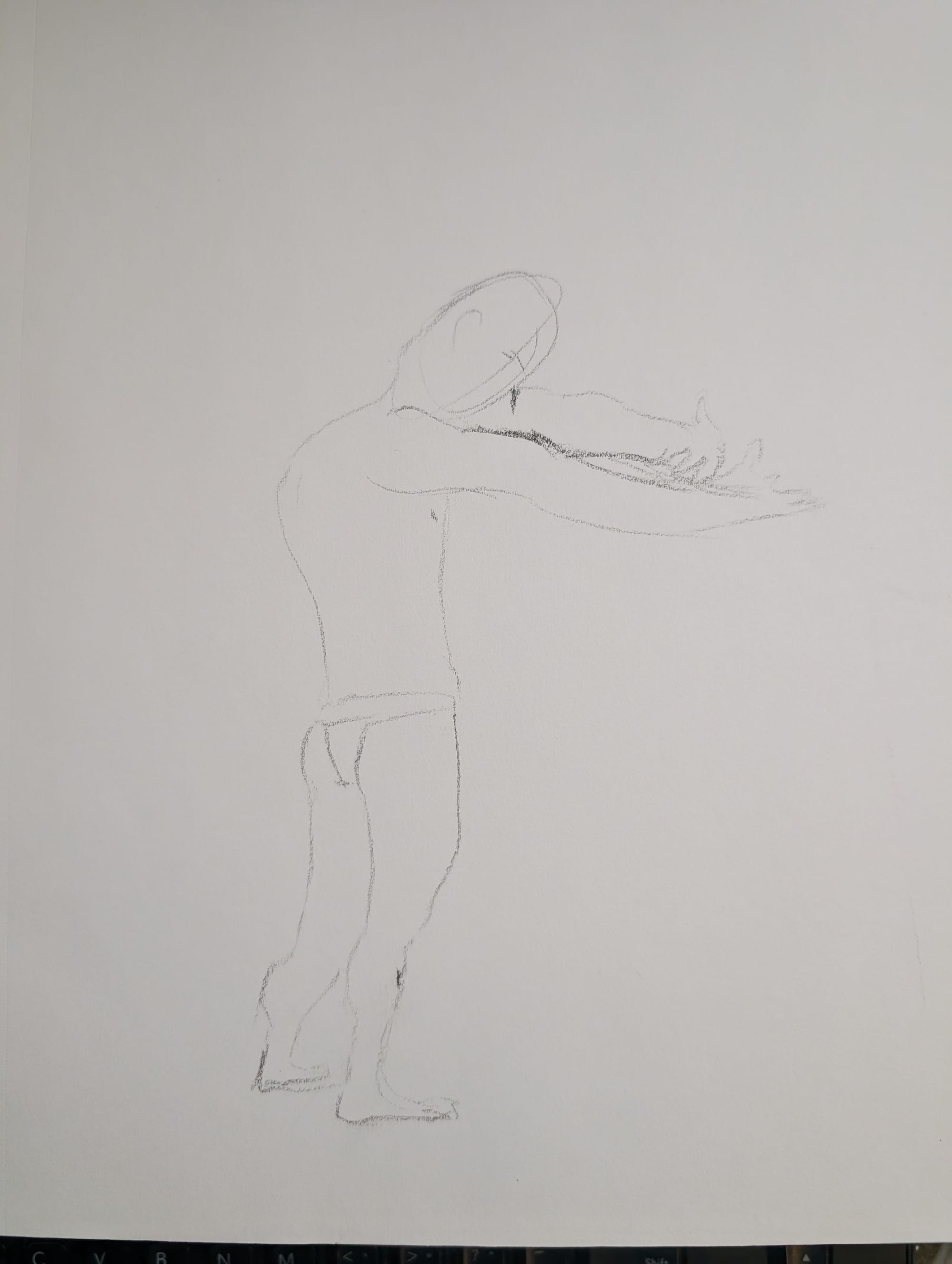
2026-02-25 Rhythms drawings
Session 2: Japanese
Finished reading Chapter 7 of Harry Potter Book 1 (JP)
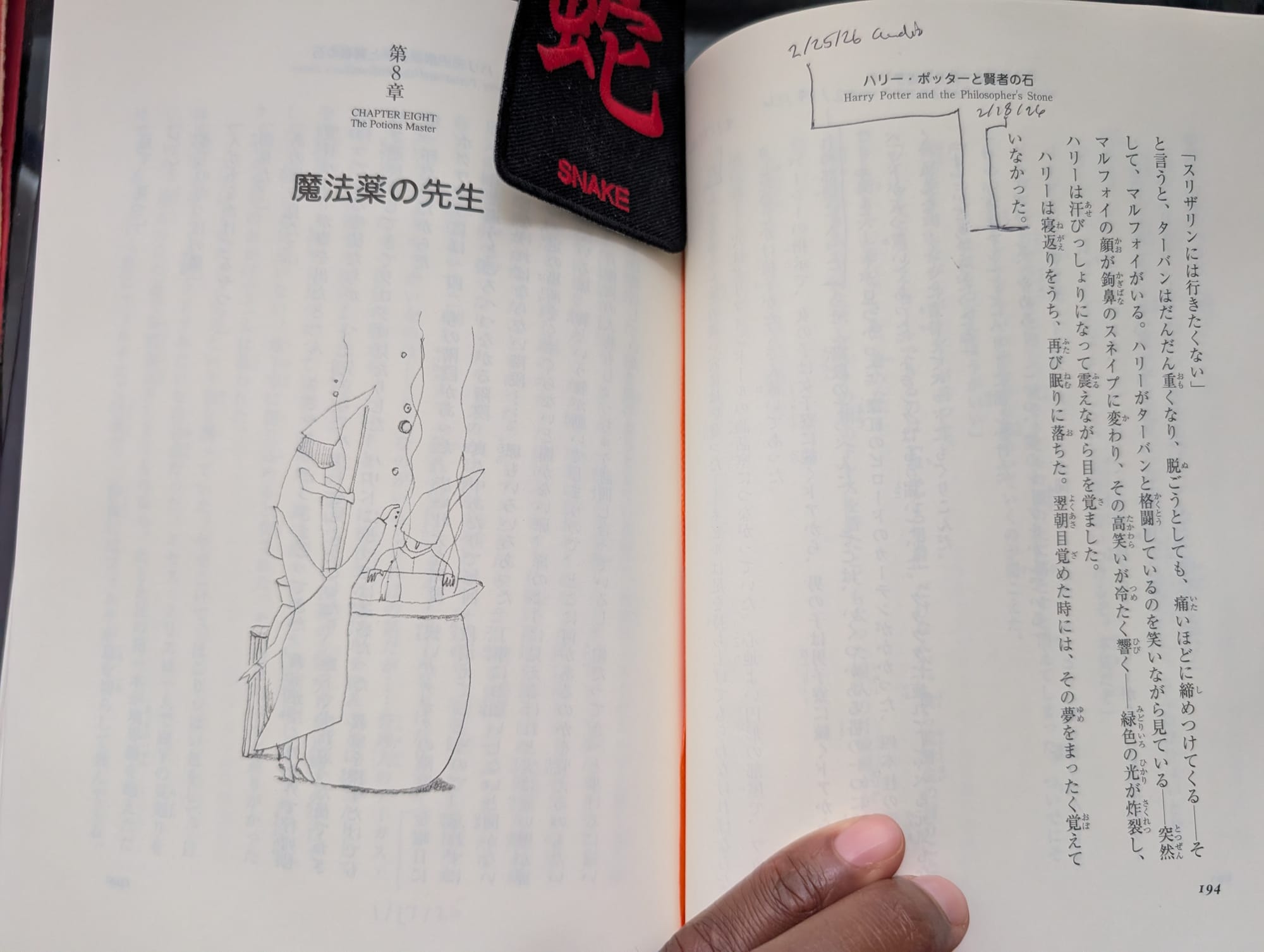
It only took me about 3 weeks to finish this chapter, which is a big speed increase.
And I don't read the chapter and move on to the next. I follow an engineered process to get max use out of each chapter:
First pass:
Alternate between intensive and extensive reading.
Intensive reading means read one sentence at a time and use AI to translate it into English, breakdown grammar, and identify all vocabulary and kanji. This builds the mechanics of the language at a slow pace.
Extensive reading means read as many pages of the chapter as possible. Don't stop to look up unknown words or translate. This builds character recognition, speaking fluency, and smoothness of delivery. The pace is meant to be fast, optimizing for flow.
Second pass:
Read the English version of the chapter. With this step, I fill in any story context or nuance I missed on the first pass. It makes it easier to focus on the language during the third pass.
Third pass:
Listen to the Japanese audiobook version while reading the text and shadowing along with it.
Shadowing is hard. You have to repeat what you hear shortly after hearing it.
Doing this while reading the text is even more difficult, because you have the added stimulus of reading the text while you speak.
But by the time I reach this step I know what the major beats of the chapter are, and I've gone through the Japanese at least once, so the most important thing is focusing on either saying the words (improving prosody and natural cadence) or reading along (boosting character recognition at native speed).
This is a very difficult step, but it builds fluency fast.
Today I adjusted my AI sentence breakdown prompt.
Here it is:
⚖️ Japanese Intensive Reading Analysis Prompt
I am improving my Japanese literacy and fluency through intensive analysis of media like the Phoenix Wright series and the Harry Potter novels. You will help me deconstruct Japanese sentences to deepen my understanding of grammar, context, and vocabulary origins.
Default Mode: GA MODE (Grammar Analysis)
Use this exact format. Keep every section brief and surgical. No long explanations. No conversational filler.
Sentence (JP)
Sentence (EN)
Grammar
- Key Grammar Points: 1–2 lines each (Include JLPT Level if applicable).
Vocabulary
- Word → Reading → Meaning (Include JLPT Level if applicable).
Kanji & Origins
- Character → Reading → Meaning (Only essential ones).
- Mini-Etymology: Provide 1 brief, high-yield fact about the word's origin. Focus on the radical components (for mnemonic building) OR the historical semantic shift of the word.
Nuance & POV
- Tone/Implication: What’s felt but not said.
- Register: Casual? Polite? Rough? Literary?
- Character POV: What this phrasing reveals about the speaker's personality or state of mind (1 line).
In-the-Wild Examples
- Provide 2 short, authentic example sentences (with English translation) using the key vocabulary or grammar.
- These MUST be pulled from real Japanese literature, news articles, or established media.
- Briefly cite the source (e.g., Author/Book, News Outlet) for each example.
🔁 QUICK COMMANDS
/GA → Grammar Analysis Mode (Default)
/COMPARE → Side-by-side comparison of two sentences + key deltas only.
/CORPUS [Word] → Generate 4 highly varied, real-world example sentences using the target word drawn from literature, news, or media, including citations for each.
Wait for my sentence. Do not add extra commentary unless asked. Ready.
Feel free to use it in your studies of Japanese or any other language.
-Keith