Bro,
Haven't talked to you since last month. Saw you put out another album. Looks comprehensive!
Hope you doing well over there. Let's catch up soon.
-Keith
Transcript
Hey there, it's Keith Hayden, the digital novelist, and I'm back with my third recording for this year. Today, I want to talk about a few mild annoyances, but also some incredibly good things that have been happening recently.
The Problem with "Market Ready"
Earlier today, I attended a promotional webinar for newer indie authors about making book covers that stand out and are "market ready". While the company presenting is actually a really good company—I've even used them for one of my own book covers in the past—the webinar really should have been titled "How to create book covers for Amazon". It focused heavily on doing research so your cover looks like current market trends.
What annoyed me wasn't the promotion itself, but the mentality. When someone inevitably asked about AI, the presenter shared their company's policy but then went on to tout the typical industry line: if you use AI, it's a quick way to get your career questioned or ruined. In 2026, while almost every other creative industry is starting to understand that this new technology is here to stay, the indie writing space feels like it is lagging behind.
There is a very vocal minority who is against any AI use online, but the reality is that the majority of people who are not chronically online creators just don't care. I work in middle and high schools with kids aged 11 to 17, and they approach AI the same way my generation—elder millennials—approached the emerging internet, Wikipedia, and Napster. They are cautious, but they are playing games with it, messing around with it, and exploring how it works.
Who Are "They"?
Sitting through that webinar made me think about a phrase we hear constantly: "Well, people say you should..." or "They say you shouldn't...". In today's era, advice is cheap. It is incredibly easy to throw up an AI-generated script that just repeats what the last person said on a podcast or YouTube video. It makes it really hard to discern who actually has the experience and authority to give you good advice. Who are these people telling me to use or not use AI, or telling me how I should create?.
Doing Things My Way
This brings me to the good stuff. About two weeks ago, I got back to writing and started working on my novel again. I committed to just 30 minutes a day, and I told myself I am going to do it my way.
For the past few years, I let myself get slowed down by trying to play by the rules of being a "good indie author". I tried not to upset the Amazon algorithms, focused heavily on social media, and started a YouTube channel. Now, I am doing the exact opposite. My website is absolutely my home base online, and there are many days where I don't look at social media at all. I post infrequently, write in other languages, and share things that have no context and aren't easily readable by an algorithm.
I use AI for some very interesting things, but in other areas where I "should" use it, I don't.
Embracing "Useless" Skills in the Age of AI
If you are a creator reading this, the question I'd put to you is: how do you want to do it?.
Are you in a position where everyone is telling you to use AI, but something is screaming at you not to?. That's exactly where I am with drawing. I’ve been learning to draw by hand for a few years now. Recently, a sixth-grader saw me sketching some skulls and complimented my work. When I tried to brush it off by saying I wasn't that good, he simply told me, "doesn't matter how good you are as long as you're having fun".
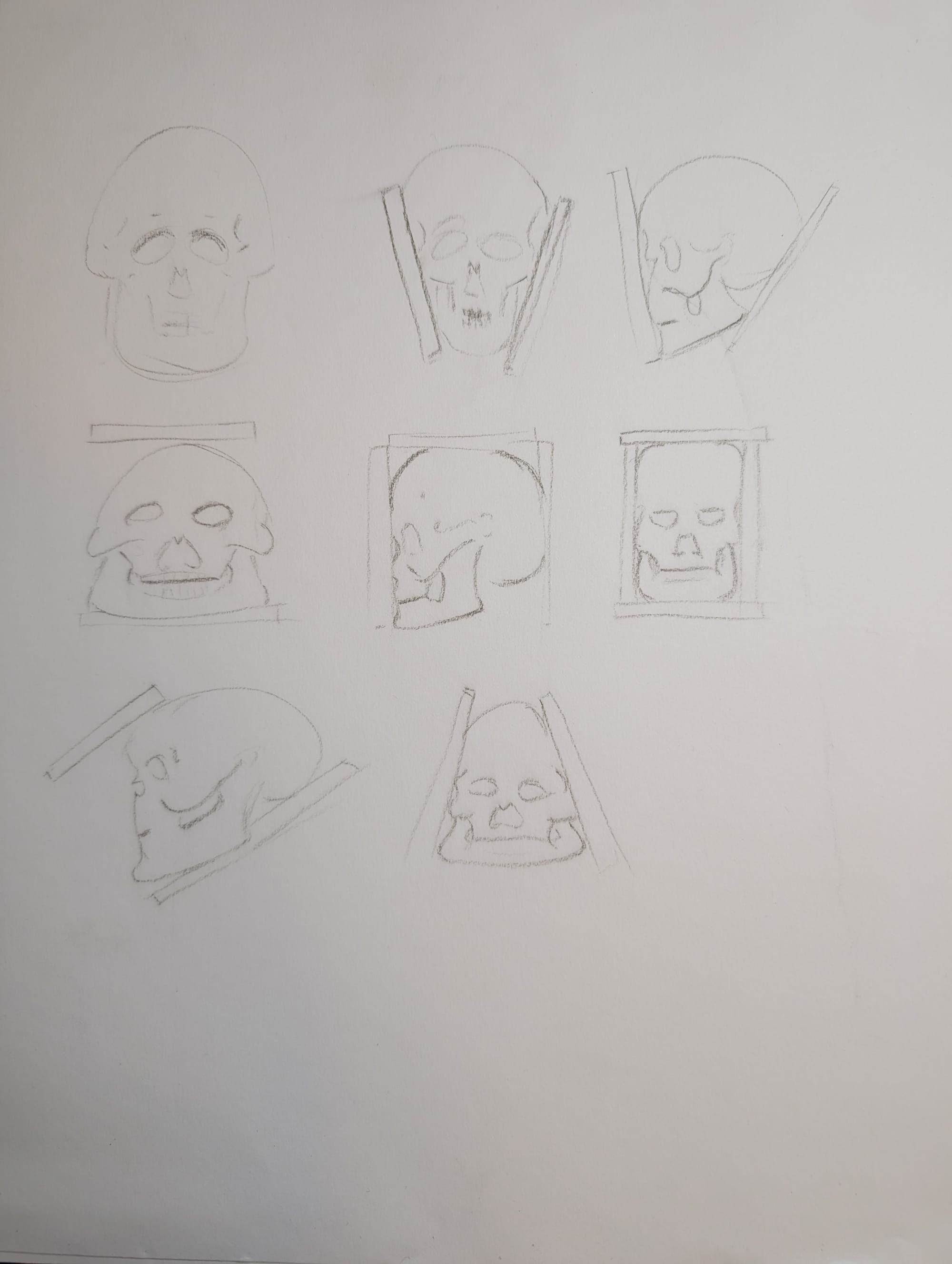
In 2026, drawing by hand might seem like a useless skill in the age of AI. The same goes for learning languages—I'm currently actively studying Chinese and Japanese—and writing code, two other skills I've been focusing on that people claim you should just use AI for.
The bottom line is that the future of work and which skills will get you recognized is completely uncertain. But what won't work is indecision, distraction, and listening to countless podcasts and shorts telling you which way you "should" do it. You have to do it the way you're going to do it, regardless of what people say is a waste of time.
Updates and Final Thoughts
If you're interested in learning more about my novel, it is a military sci-fi horror called Cereus & Limnic: Escape from Okinawa Type B, and you can find more information on my website. I've also started a top-secret project that I'm very excited about—it integrates a writing project, a game, a journaling project, and some software.
I'll end this with what I always say: don't give up out there. There are multiple times a week I ask myself why I bust my ass learning to code or writing a novel when AI can produce high-quality equivalents. But when you blindly follow industry advice, you take on a sense of sameness.
While it is important to be somewhat legible to your audience, you cannot lose the instinct to put something weird in your work. Whether it's an inside joke or a quirk that only you understand, don't cut it out just because the algorithm won't get it. That little quirk could be the exact thing that makes your work resonate with someone, and if even just one person gets it, it's a win.
Love the life you've got. Be true to yourself and your art. Tell the truth and good things will happen.