
Joey,
Hope you're doing well. Put this essay together after watching an uncanny video.
Really made me think about today's rapidly changing media environment.
Hope you enjoy it!
-Keith
YouTube is a source of infinite time-wasting or time-worthy information. There is more video every minute, which is why I developed my five-minute rule.
Any video I enter, I stay for five minutes. If I am not finding anything valuable, informative, or funny, I leave.
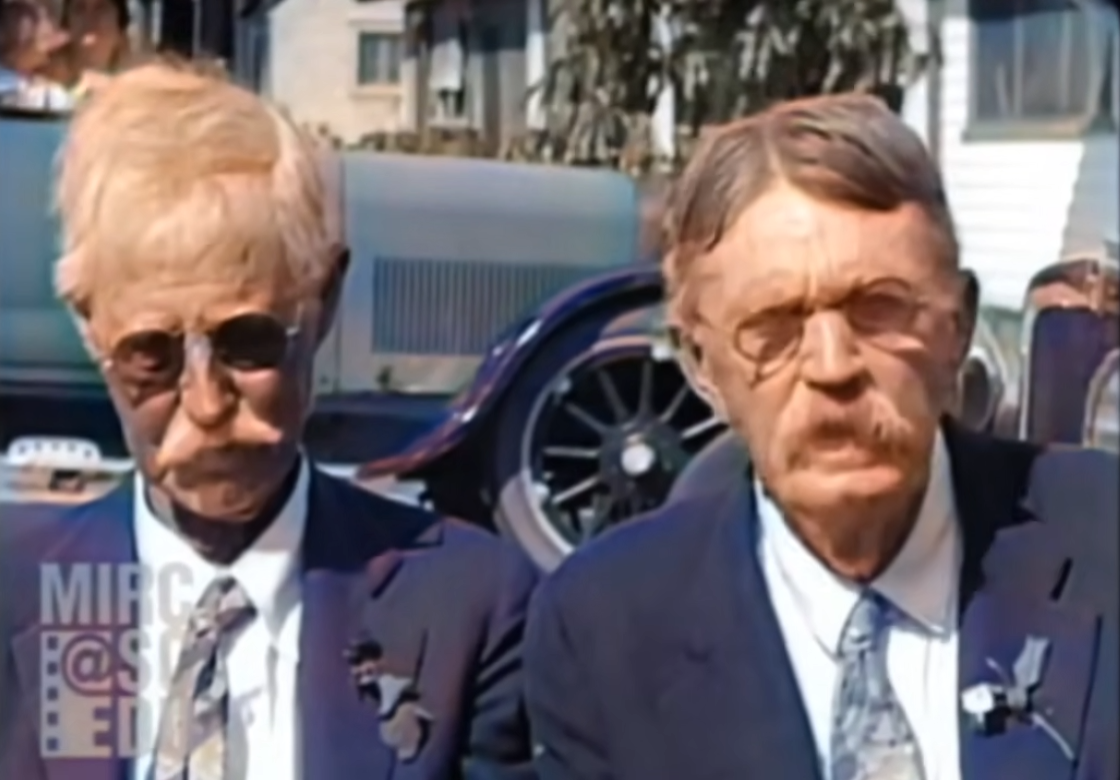
The one I clicked on while eating lunch on a day in late May nearly held me longer, but for a reason I didn't anticipate. The video was titled “Interviews With People Born in the 1800s! Filmed in 1929 Restored Color.”
The video opened with an early twentieth-century newsreel screen. The date and location of each talk appeared, along with some information about the people being interviewed. You got their age, sometimes their name, and usually a brief line of description about who they were. Then the footage began. The interviewees introduced themselves and said something about their lives— all very normal upfront.
At first, the whole thing had a familiar archival feel. The image quality was predictably poor, running under the snowy texture of early film. The sound had that crackly old-broadcast quality. The people seemed to come from unrelated clips stitched together into a composite, which gave the video a museum-artifact feeling.
But as the minutes passed, a feeling of unease hit my stomach.
At the five-minute mark, I paused the video and ask myself: what did I just watch?
Is this even real?
My first conclusion was simple: probably not. This had to be AI.
I had reasons to think so. The lip sync felt slightly skewed. Some of the voices sounded oddly similar to each other. The people interacted in strange ways, or sometimes did not seem to interact at all. Subjects spoke with the flavor of historical testimony, but the presentation felt too weightless and smooth. One man recounted working for a colonel and fighting off a thousand men with rocks, a story that might have been true, but in the moment felt like an AI-generated approximation of a Civil War veteran’s memory.
All of these factors turned a history video into a form of horror. And I immediately recorded a few thoughts about it, which shortly evolved into an essay draft titled "The Soft Horror of Synthetic Historical Archive Footage."
Then I went to bed.
The next morning I began revising the draft and pulling screenshots from the video to present as evidence to support the claim that the video was AI generated. About an hour and a half into the work, I noticed the watermark.
I had seen it on first watch, but hadn't looked deeper into it.
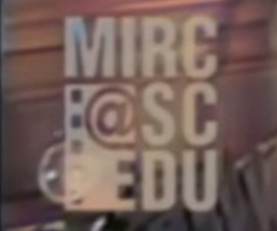
What I found drastically altered what you're reading now, and revealed an even deeper issue than synthetic historical video.
MIRC@SC.edu.
MIRC is the University of South Carolina’s Moving Image Research Collections. It's an actual archive with a substantial body of historical film material from the late 19th and early 20th centuries. It took some digging, but I eventually located several of the clips used in the YouTube video in the archive. To my embarrassing surprise, turns out the footage I had assumed was AI generated had originated from real archival holdings.
That should have ended the essay. It almost did.
But instead, it made the essay stranger.
Although I was wrong about the footage being wholly AI-generated, I wasn't wrong about the feeling about the unease I felt while watching it.
What disturbed me wasn't pure fabrication. It was the instability of the object itself: real archival material pulled from an institutional context, compiled by a third-party faceless YouTube channel, colorized, restored, possibly sound-enhanced, packaged with modern thumbnails and titles, then released into the feed as emotionally immediate historical artifact. Was this archived footage? Or was it content? My inability to label it made it feel monstrous in a horror film way— unexplained and potentially threatening to my perception of reality.
The horror wasn't that the people had never existed.
The horror was that real people could be made to feel synthetic.
When Does Archive Become Media?
The question, then, is not simply whether the footage is real or fake. A more contemporarily urgent one: when does historical footage become so enhanced, repackaged, and decontextualized that it turns into a new piece of media?
Colorizing an old clip is one thing. Cleaning up damaged film is another. But smoothing motion, compiling unrelated interviews, designing a modern thumbnail, adding clearer (or even assumed AI-generated) audio, then uploading the result through a faceless YouTube channel is something else. At some point, the archive is no longer being encountered as archive. It transform into modern platform-native content.
That distinction matters because archive footage inside an archive, whether online or in-person, carries institutional context. Upon entering, a viewer expects catalog records, source notes, rights information, collection names, dates, and some traceable path back to the original object. Archive footage on YouTube carries platform context. A viewer expects a title, thumbnail, comment section, channel identity, algorithmic recommendation, and maybe a short description if they bother to open it.
The underlying footage may be the same.
The experience is not.
This is where the unease begins. Because if the goal is for viewers to understand that they are looking at real historical footage, the burden cannot fall entirely on a small watermark at the bottom of the screen. In the current media environment where any form of media can be created via a large language model, provenance has to be made explicit. That could be through a link to the archive or name of the collection where a disclosure of what was restored, colorized, recreated, or added could live. That would tell the viewer whether the sound is original, cleaned, synchronized, reconstructed, or speculative.
This video, of course, had none of that.
And without that context, even real footage can begin to feel synthetic, because the viewer has been given no stable way to understand the chain between the historical event and the modern video object.
The footage remains archival at the source level, but becomes potentially synthetic at the experience level.
That is the strange new category.
History Is Interpretation, Not Just Footage
There is an obvious educational appeal to videos like this. For many people, history is dry. Unless it is presented through a dramatized movie, prestige TV series, video game, or oversaturated documentary, many viewers do not care. Enhanced archival video can bridge the gap between dusty textbook and simplified historical entertainment.
That is why part of me finds the form fascinating.
I had a civilian professor at the Air Force Academy who made history come alive for me. Foreign Area Studies with an Asia concentration was my major in college. In one of my upper-level Asian history courses, Dr. John Jennings was my professor. He was an expert in his field and passionate about Eastern history, and he brought history to life through story.
He did it old school, with few modern teaching aids. While everyone else transitioned to PowerPoints and e-learning in the late 2000s, he relied on an overhead projector, a few transparency sheets, and his voice. Being an audio learner, the approach was perfect for me. I realized he barely needed visuals. He talked through history in a way that made it feel vividly alive as he detailed the rise and fall of Chinese dynasties and the quirks of ancient Japanese folklore.
I loved it and still recall his course fondly.
This connects directly to my love for Dan Carlin’s Hardcore History. Carlin can take the Assyrian Empire, the Mongols, or the First World War and make you feel the scale of it by offering a mutli-hour dramatic door into the past.
Jennings and Carlin are interpreters of history.
They are learned men who have consumed large amounts of historical evidence, then relate those stories through voice to students and listeners. Their work is not just delivery. It's judgment. They decide what to present, draw conclusions based on what they've read or watched, and apply common sense to get at historical truths.
The limitation of that kind of presentation, though, is the lack of visuals. Today, we live in a visual-first world when it comes to information consumption. That's why enhanced historical footage is so powerful. It pulls history from the pages and plays it on screens, making for much easier engagement.
But without a clear interpretive layer, these videos risk acting as evidentiary proof without verification.
Restoration through modern AI tools isn't the issue alone. The risk is that viewers may not know where evidence ends and reconstruction begins. A professor, historian, archivist, or documentary filmmaker provides an interpretive layer, explicitly defining what is fact, speculation, restoration, interpretation, or artistic choice. They anchor their claims to a traceable source.
The YouTube video didn't do that clearly enough.
It had a watermark, yes. But a watermark is a clue, not provenance. A watermark is not the same thing as a source note, archive link, collection description, or restoration disclosure. That mark still requires the viewer to launch a small internal investigation to determine whether what they are seeing is what they think they are seeing.
That is a new burden.
Before, seeing was close enough to believing. In the age of AI, that won't cut it. Now a viewer has to ask: Is this original? Is this restored? Is this colorized? Is this AI-enhanced? Is the sound real? Is the voice original? Is this a university channel? Is this a content farm? Is this public-domain footage? Is this fact or fictionalized?
Most people will never ask all that.
They will either believe it immediately or dismiss it with a shrug: “That’s probably AI.”
Both responses are understandable and potentially dangerous in different ways.
The Skepticism People Will Not Name
This is one of the problems of our current media environment. Many people are developing a new kind of skepticism they may never name directly. One question dominates when they encounter any form of media, especially if it goes against their dominant worldview:
Is it AI?
Sometimes they will be right.
Sometimes they will be wrong.
The problem is that the viewer’s senses are no longer enough. The video can look or sound real. can look real, and still something about it could feel detached from its source.
This does not mean every use of AI or digital enhancement needs a warning label. In creative fields, the disclosure question is more complicated. All creative mediums have long relied on technology to transform instinctual human intention into polished output. AI is the latest and most powerful of those tools, but it is not the first.
But historical footage is closer to reality. It's on the same level as news, product imagery, and anything else that directly influences how people make decisions in the physical world. That should have a different burden of veracity. Nobody wants to be deceived by synthetic media when it influences what they believe, buy, vote for, fear, remember, or trust.
That is where disclosure becomes more than etiquette.
It becomes infrastructure.
We need better frameworks for classifying media authenticity in domains where reality matters. Because the old cues are broken and individual discernment (as seen in my example above) will have you call something real as AI, or an AI generation as real.
This is no longer a niche problem. It's become a basic literacy one.
The Library and the Movie Theater
The easiest way to piss off viewers on YouTube is to not deliver on the video's promise. With respect to this video, the promise set in the thumbnail was kept. But the danger of this class of content is it's presentation of historical material out of context.
The closest analogy that comes to mind is walking into a library and discovering that it has been arranged like a movie theater.
A library has one set of expectations. Shelves of books, a look-up kiosk, some chairs for reading etc. Even when the material inside is entertaining, the environment tells you that objects have been organized for retrieval, study, and preservation.
However, a movie theater has a very different set of expectations. There's the smell of popcorn, general darkness, and speakers blasting audio from various sources. It's a completely different experience to the library.
Now imagine entering a library, seeing what looks like a historical document, and realizing it is being presented with the grammar of cinema. That does not automatically make the document false. But it does change your relationship to it. It creates expectation whiplash.
That is what this video did.
If I had found the footage on an official University of South Carolina page, with collection notes and source links, I likely would have accepted it more easily. If the YouTube channel had clearly identified itself as affiliated with the university, or named the archive, I might have simply thought: this is an old collection of interviews, cleaned up for modern viewing.
But that's not how I encountered it.
It appeared as an option on my always refreshing YouTube feed, from a faceless channel with a modern title and no obvious institutional frame beyond the watermark embedded in the footage. The video was not a trick, exactly. It appears to have delivered what the title promised. But the presentation environment made the footage unstable. It made the archive feel like content, which made me more suspicious of it.
The Embodiment of Negative Space
The more I think about it, the more I realize why the video disturbed me: it felt like negative space.
The type of horror that scares me most is the unexplained and contextless, where the surface meaning is recognizable but the deeper significance is hollow or inaccessible. It reminded me of wandering through Meow Wolf’s Omega Mart in Area 15 in Las Vegas. You walk into a quirky facility full of secret passages and conspiracy lore, marveling at the bizarre world-building. But at Omega Mart, you know it is a constructed oddity designed as a giant immersive puzzle.
This video possessed a similar engineered mystery while presenting itself as reality.
At first, I thought the footage was not genuinely archival. Then I discovered it likely was. But that did not fully resolve the unease. It only moved the feeling of disquiet to another place.
It felt like discovering a 1920s history book in an archive that looks perfectly legitimate on the outside, but when you open it, half the pages have been rewritten, the photographs have been colorized, the captions have been modernized, and no one tells you which parts were original and which parts were added later.
A factual occurrence transforms into a possible fabrication.
Synthetic Memory
What was the point of the video besides racking up views?
I think it's providing direct contact to the past.
The comments section was full of people relating stories about distant relatives and connections to 1929. Each one was an attempt to grasp the past shown in the footage.
Enhanced historical videos understand that desire perfectly.
They do not merely show us the past. They manufacture the feeling of memory.
However, this desire can be weaponized against us. While this kind of media can spark curiosity and make history feel less static, it can also create synthetic memory. Once you consume enough of it, the images lodge in your mind. They become part of your internal picture of the past, whether or not you can verify where they came from.
It reminds me of how memes enter public consciousness. A joke, image, rumor, or exaggerated scene can become more memorable than the verified record. Even when later corrected, the narratively perfect version stays. People remember the image because the image had emotional force.
I worry about the same phenomenon with enhanced historical media. If the internet fills with five-minute videos for every major event, tragedy, subculture, war, city, and social era, it becomes difficult not to absorb those images into your mental picture of history.
This Needs a Label
Of all the media categories being transformed by AI and enhancement tools, historical archives may need labels most urgently.
I'm not against AI-assisted cleanup of historical media or the creation of resources to inspire curiosity about the past.
But we must recognize the need to present the past in a manner that does not confuse it with our present or the innate bias of large language models.
This label doesn't need to be complex. It can be as simple as describing what was done to the original artifact.
Something simple like:
Original archival footage from [collection].
Colorized for modern viewing.
Audio restored from original source.
Ambient sound recreated.
Dialogue fictionalized.
AI used for cleanup or frame interpolation.
Source links in description.
That is enough to tell the viewer what kind of object they are encountering.
Without this distinction, viewers have no way to tell if the media is historical or creepypasta.